
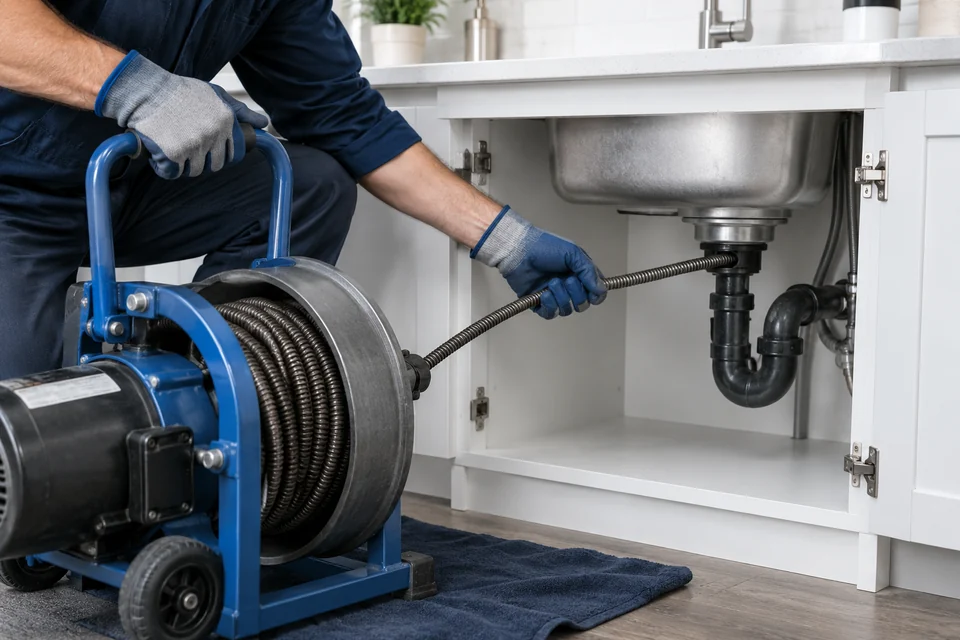
Watching a sink empty should not require patience, a second cup of coffee, and a pep talk. A clogged drain interrupts ordinary routines in a surprisingly persistent way. You shorten showers, avoid the guest sink, or give the laundry room a suspicious glance. The temptation is to find something that gets water moving immediately and consider the problem finished.
Clogged drain cleaning in Pinecrest starts with a slightly better question: what is restricting this drain, and how far does the problem extend? A blockage near one fixture is different from trouble in a shared line. Matching the approach to the location and condition helps make the work more useful than another brief improvement.
Start with the pattern of slow drainage
Identify which fixture is affected and whether the problem developed gradually or appeared suddenly. Gradual slowing can be consistent with accumulated material, while a sudden stoppage may follow something entering the drain. Neither description proves the cause, but both give the assessment a direction. Mention any unusual noises, odors, or recent work nearby.
Look at the household pattern without repeatedly running water into a known backup. If several fixtures are already struggling, say so. Our sewer line cleaning guide explains why multiple affected fixtures may call for a wider investigation. Clearing a small accessible section might not address a restriction farther downstream.
Different drains collect different problems
A bathroom basin, shower, and kitchen sink have different daily demands. The fixture and its use help determine what the person assessing the drain should consider. A little detail about how the problem behaves is more helpful than describing every blocked drain as exactly the same job. Plumbing has enough mysteries without making the service request one of them.
The kitchen has its own personality
Food residue, grease, and the arrangement of the sink and disposal can all matter when investigating a kitchen blockage. If one basin backs up into the other or the dishwasher discharge is involved, include that information. Our dedicated kitchen drain cleaning page looks at those connections and the habits that affect them.
A recurring clog deserves its history
Say when the drain was last cleared, how long the improvement lasted, and what method was used if known. A blockage returning after a short time deserves that context. You do not need the previous person's technical vocabulary. “It worked for a week and slowed again” is a useful fact on its own.
Choosing a cleaning approach
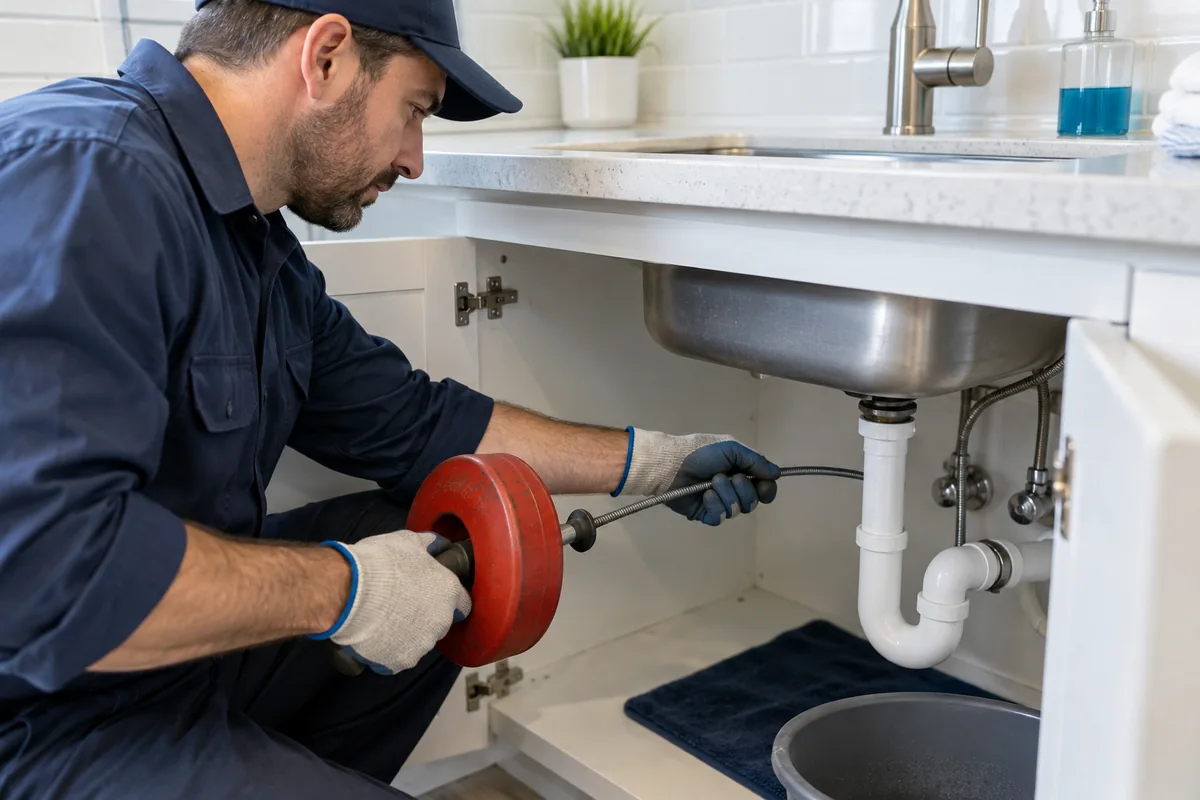
The assessment should consider the drain's access, likely obstruction, material, and visible condition. Different clearing tools suit different situations. The goal is not to use the most powerful equipment available; it is to use an appropriate method for the line and the problem. Ask why the recommended approach fits your particular drain.
Some lines may be candidates for hydro-jetting, while other situations call for another method or further investigation. High-pressure cleaning should not be assumed suitable for every pipe. If condition is uncertain or recurring symptoms suggest a defect, discuss what can be established before additional cleaning is attempted.
What counts as a useful result?
Ask how restored flow will be checked and what the cleaning revealed. Was a specific object removed? Was the restriction cleared enough to evaluate the line further? Were there limitations in access or visibility? Understanding the result helps you decide whether the issue is resolved or whether a follow-up assessment is needed.
Skip the escalating home experiments
Repeatedly adding drain products or combining chemicals can create risks without explaining the blockage. If you have already used a product, tell the person who will work on the drain. Keep the container information available when possible. Do not assume that because water eventually moved, the product is no longer relevant to the work area.
Avoid dismantling unfamiliar plumbing or opening a drain access point that may contain backed-up wastewater. Stop using fixtures that are overflowing and keep people away from contaminated water. The useful preparation is to describe the symptoms and provide safe access, rather than attempting every possible remedy before making contact.
Prepare a few details before the visit
- Identify the exact fixture and whether nearby drains have similar symptoms.
- Note when the problem began and whether it follows a particular appliance cycle or activity.
- Share prior clearing work, recurring backups, and any products used in the drain.
- Clear a safe path to the fixture and point out known access locations without opening them.
For a Pinecrest home with an addition or recently remodeled room, mention that history too. Drain routes can change during renovations. Knowing what was altered can help orient an assessment, particularly when a problem appears only in one part of the house or began after other work was completed.
Keeping the improvement going
Ask for prevention guidance based on what was actually found. A removed foreign object calls for a different conversation than a line affected by recurring buildup. Fixture strainers and sensible disposal habits may help with some everyday debris, but they cannot correct a damaged pipe or a poorly performing section farther along the route.
Does another clog mean the cleaning failed?
Not necessarily. A new obstruction, an unresolved restriction, or a structural issue can each produce renewed symptoms. The timing and findings matter. Keep the service record and describe what changed after the work. That allows the next assessment to build on evidence rather than starting from zero every time.
When should I arrange an assessment?
Persistent slow drainage, recurring blockages, or water returning into another fixture are good reasons to discuss the problem. Do not wait for a convenient overflow to provide proof. A clear description today gives you more room to plan than a flooded bathroom tomorrow, and helps the conversation focus on the drain that actually needs attention.
Give that slow drain a proper assessment
Tell Pinecrest FL Plumbing what is happening at your property. Share the details and ask about current service availability.
Request service information