
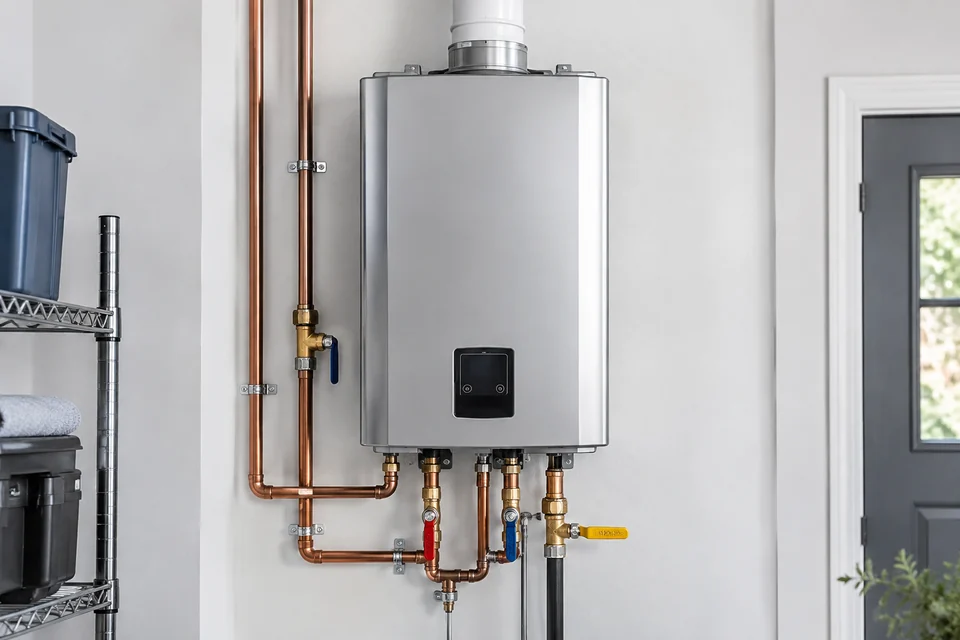
Tankless water heaters attract attention for a simple reason: replacing a large tank with compact equipment sounds like a tidy improvement. More space, a different way to heat water, and one less bulky object in the utility area. The appeal is understandable. The decision, however, needs to include how the equipment will serve your actual household.
For a Pinecrest home, a tankless proposal should explain demand, installation requirements, and the experience you can reasonably expect at the fixtures. “On demand” describes how water is heated. It does not mean unlimited simultaneous use or instant arrival at every distant faucet. Those distinctions are worth sorting out before selecting a unit.
Start with simultaneous demand
List the activities that commonly overlap: two showers, a kitchen sink, laundry, or a tub filling at the same time. A useful sizing discussion considers the combined hot-water demand and the temperature increase the equipment must provide. Manufacturer performance information should be evaluated for the conditions relevant to your installation.
Rheem's explanation of tankless flow capacity illustrates why flow and temperature rise belong together in the discussion. A headline maximum is not a promise of the same output under every condition. Ask the installer to explain the proposed model in terms of your routines, rather than a number that looks impressive in isolation.
Count the activities, not just the bathrooms
A home with several bathrooms may rarely use them together. Another home may have a concentrated morning rush. Explain how the property is occupied and whether guest visits or planned renovations change the demand. You are choosing equipment for everyday life, including the occasionally crowded version of everyday life.
Heating water and delivering it are separate jobs
Even when a heater produces hot water as needed, the water already in the pipe between the unit and the faucet still affects waiting time. The length and configuration of that route matter. If your main frustration is waiting at a distant bathroom, make that the focus of the discussion rather than assuming a conversion alone will fix it.
Ask specifically about recirculation
Some installations may include a recirculation approach suited to the equipment and plumbing layout. That is a separate design conversation, with its own controls and requirements. Ask whether it is included, how it would work in your home, and what changes would be needed. Avoid treating a feature on a brochure as proof that the existing piping already supports it.
A conversion needs an installation assessment
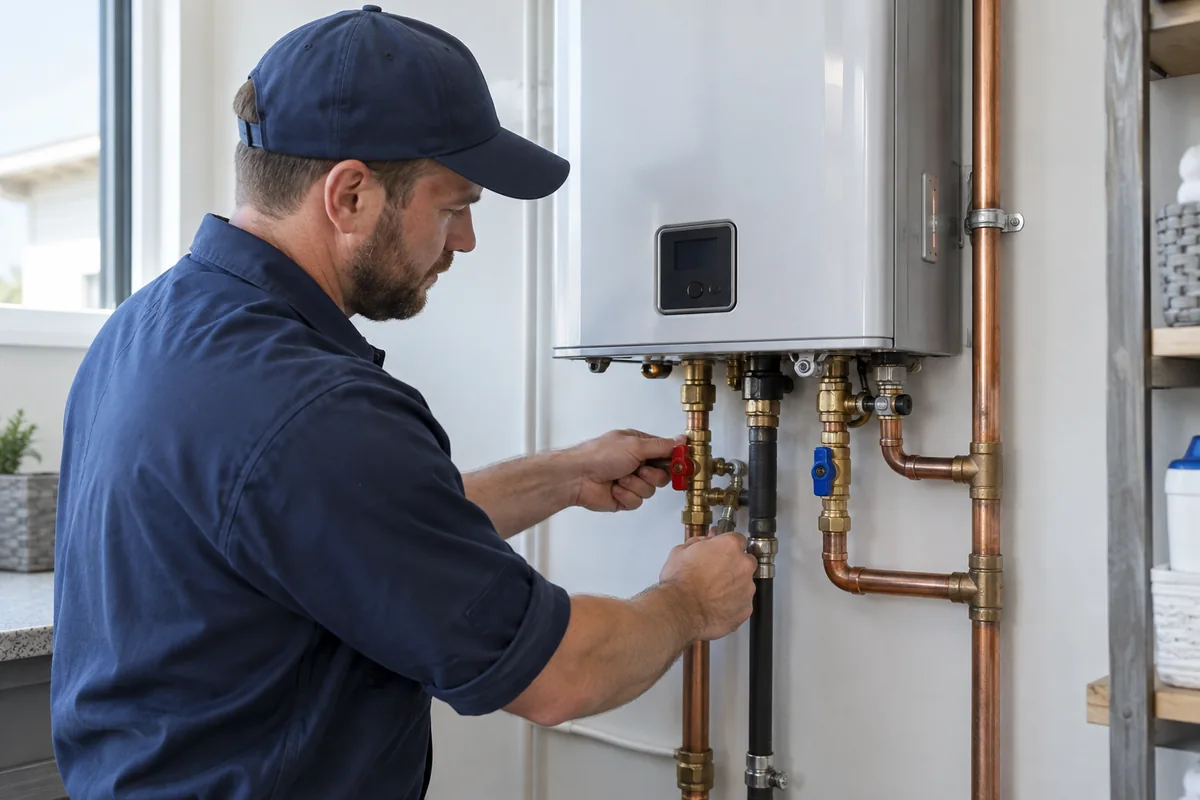
Available electrical or fuel service, equipment location, and the manufacturer's requirements affect which options are practical. Depending on the model, other connections and installation conditions also need consideration. The proposal should identify the work required at your property rather than present tankless equipment as a universal direct replacement.
If you are comparing a conversion with another storage unit, the water heater replacement guide helps organize the broader decision. Ask for complete scopes on both options. Equipment cost alone will not explain the difference if one approach requires additional work to utilities, routing, or the installation space.
Leave room for future servicing
Compact equipment still needs access. Ask how service connections and manufacturer clearances will be maintained, especially in a tight utility area. A unit should not become difficult to maintain because the location was chosen solely for appearance. The best-looking installation is also one that can be understood and serviced later.
Water conditions and maintenance belong in the plan
Tankless systems have model-specific maintenance requirements. Ask how local water conditions and the selected equipment affect the recommended care. Keep the manual and any installation documentation together. Our water heater maintenance page explains how a useful service plan begins with the actual model rather than a universal internet schedule.
If treatment is being discussed, identify the water concern before adding equipment. A whole-home filtration system must be selected for its intended purpose; not every filter addresses every water characteristic. Ask how a proposed treatment relates to the heater's requirements and whether there is evidence that it suits the issue being considered.
What to ask when comparing proposals
- Which equipment model is proposed, and how was it matched to the home's simultaneous demand?
- What utility, plumbing, or installation-space changes are included in the scope?
- What hot-water delivery experience should be expected at the farthest fixtures?
- Which maintenance tasks, access provisions, and product warranty conditions apply?
Also ask what is optional and what is necessary for the installation. A clear explanation lets you compare practical choices without turning the process into a contest over product features. The winning option is the one that suits your home and preferences, not necessarily the one with the longest list of badges.
Already have tankless equipment?
If an existing unit displays a code, changes temperature unexpectedly, or stops operating, record the symptoms and model information without opening the equipment. Note whether all fixtures are affected or only one. The water heater repair page outlines useful details for an assessment. A performance problem should be diagnosed before equipment settings or components are changed.
Is tankless automatically the better choice?
No single equipment type fits every property. Installation conditions, household demand, ownership preferences, and ongoing care all matter. Compare the practical experience and complete scope of the options available to you. That approach leaves room for a good decision without forcing your house to fit a product chosen too early.
For a Pinecrest tankless inquiry, start with the current heater, the installation location, and the routines you want to improve. Then ask for an explanation grounded in those details. A little planning now can make the eventual change feel less like buying a complicated appliance and more like solving a specific household need.
Explore whether tankless fits your home
Tell Pinecrest FL Plumbing what is happening at your property. Share the details and ask about current service availability.
Request service information