You step into the shower expecting a fresh start. A few minutes later, your ankles are sharing space with water that should have left already. Slow shower and tub drains are easy to notice and surprisingly easy to postpone. You shorten the shower, wait for the tub to empty, and promise to deal with it after the weekend.
Shower and tub drain cleaning in Pinecrest begins with locating the restriction and understanding whether it is confined to that fixture. Material near the drain opening is one possibility. A problem in the connecting branch line is another. The right assessment looks beyond the surface when the symptoms suggest the drain has a bigger story to tell.
How the water behaves matters
Explain whether drainage has slowed gradually or stopped suddenly. Mention whether standing water clears between uses and whether the tub behaves differently from a nearby shower. If the same fixture keeps clogging after brief improvements, include that history. A timeline can be more informative than the depth of today's puddle.
Does the toilet change what happens?
Water movement or gurgling in a shower when another fixture is used deserves attention. A shower drain may be the place where a shared backup becomes visible. Our sewer line cleaning guide explains why symptoms affecting several fixtures call for a wider view. The lowest visible opening is not automatically the source of the trouble.
Is the drain slow, or is the fixture leaking?
Water remaining in the shower pan is different from water appearing outside the enclosure or beneath the tub. A drain restriction and a fixture leak can occur together, but they need separate assessment. Describe both rather than assuming that clearing the drain will resolve every wet area around the bathroom.
What can collect along the route
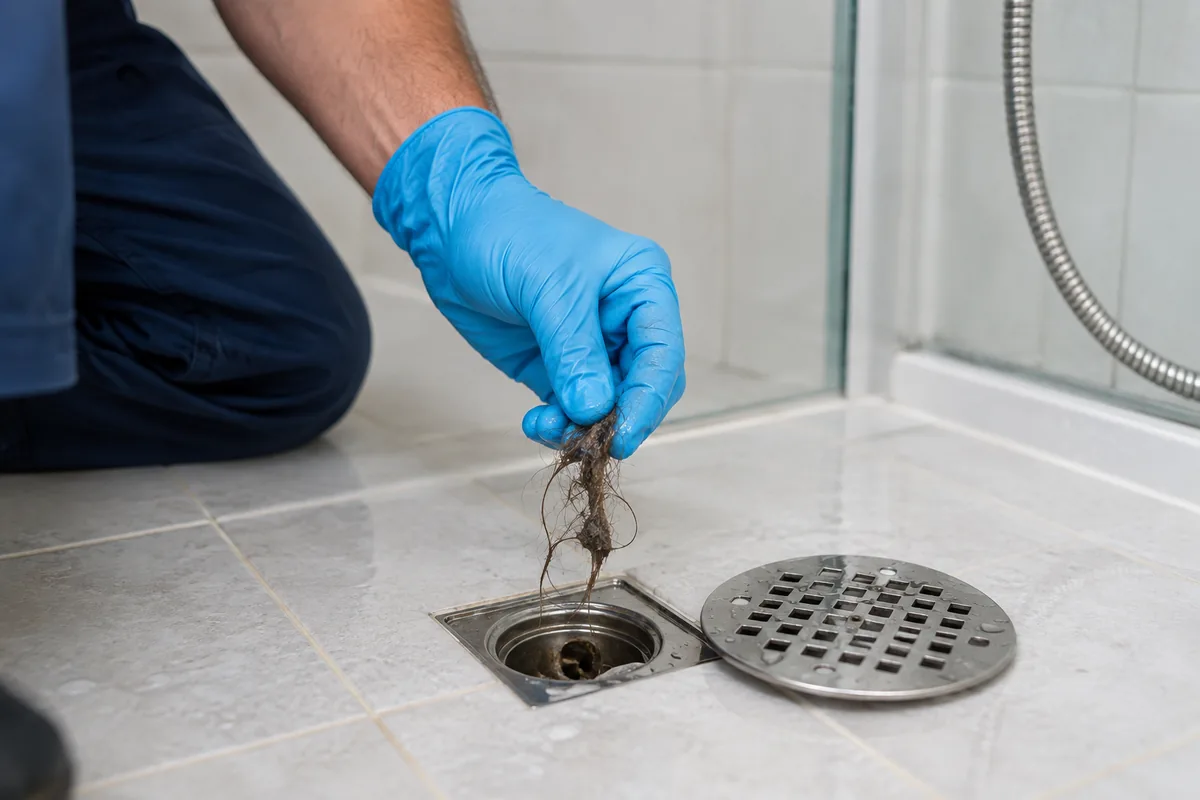
Hair and residue from normal bathroom use can accumulate in accessible and less accessible parts of the drain. The condition of the cover, stopper, and connecting plumbing also affects the assessment. A visible obstruction may explain the problem, or it may represent only the portion you can see from above.
Do not force tools through an unfamiliar opening or dismantle a tub drain assembly without knowing how it is connected. Damage to a concealed connection can turn a drainage problem into a leak. If a product has been poured into the drain, disclose it before work begins and avoid adding another product on top of it.
Plan the cleaning around access
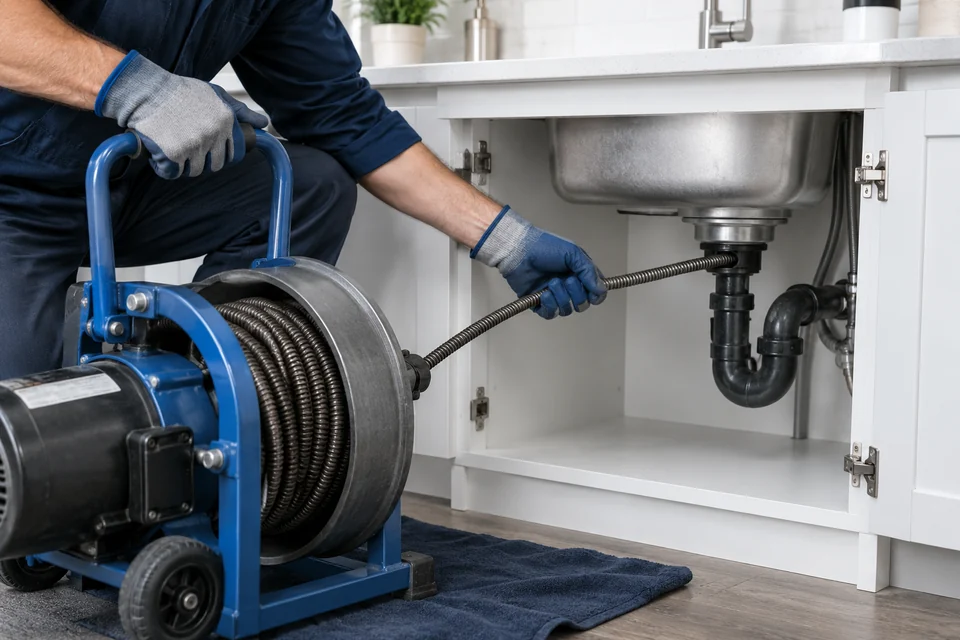
Shower and tub arrangements vary. Some provide relatively straightforward access; others place components behind finishes or beneath a fixture. A sensible plan considers the available route for clearing and the condition of the plumbing. Ask how the person assessing the drain expects to reach the restriction and what findings might change the scope.
For a general explanation of clearing methods and recurring symptoms, see clogged drain cleaning. The useful principle is to choose the method around the line. More force is not automatically more effective, particularly when the condition or layout is uncertain.
What should be checked afterward?
Discuss how drainage will be observed under normal use and whether nearby fixtures need consideration. Explain if the original problem appeared only after several minutes, rather than immediately. A brief rinse may not reproduce the pattern you were seeing during a full shower. The person completing the work should know what success needs to address.
Don't confuse drainage with shower performance
A shower can have weak spray and a slow drain at the same time, but those symptoms involve different parts of the plumbing. The supply brings water in; the drain carries used water away. Replacing a showerhead does not clear the drain, and drain cleaning does not solve an inconsistent mixing valve.
If temperature control, a dripping tub spout, or a leak from the shower fittings is also bothering you, explore shower and tub plumbing. Combining the observations in one service conversation is useful. Combining the diagnoses without an assessment is less useful, even if the bathroom seems determined to submit all its complaints at once.
Prepare the space without creating extra work
Remove bottles, mats, and personal items from accessible dry areas. Keep children and pets away from any backed-up wastewater. Point out known access panels and mention recent remodeling. Avoid opening concealed spaces or moving heavy fixtures to make the appointment easier; simply describing the layout can help the work start sensibly.
For a household sharing one bathroom, discuss how long the fixture may need to remain unused and whether additional work could be necessary. Availability and duration depend on the findings. Ask what the proposed service includes and whether any separate repair or restoration would be discussed before proceeding.
Keeping future showers uneventful
A suitable drain strainer can help capture some debris before it enters the line, provided it fits the fixture and is kept clean. Follow the fixture manufacturer's care instructions and remove accessible collected material safely. Prevention should be routine enough to maintain; nobody needs a bathroom maintenance plan that requires a clipboard every morning.
If slow drainage returns, note how soon and under what conditions. Repeated trouble deserves investigation rather than an endless sequence of temporary fixes. Keep any previous findings available so the next assessment can build on them. A drain's history helps distinguish new debris from a problem that was never fully resolved.
What to include in your Pinecrest request
Describe the fixture, the length of time water stands, and whether other drains react during use. Mention prior cleaning, drain products, and any nearby leaks or remodeling. Those details give the conversation a clear starting point. The aim is a shower that supports your routine again, with an explanation of what was found and what to watch afterward.
Bring the shower routine back to normal
Tell Pinecrest FL Plumbing what is happening at your property. Share the details and ask about current service availability.
Request service information