
The shower feels less enthusiastic than it used to. The kitchen takes longer to fill a pot. Someone says the house needs “more pressure,” and suddenly every faucet is under suspicion. Water-delivery complaints are common household observations, but they do not all point to the same cause. The most useful first step is to map exactly where and when the change occurs.
Water pressure assessment in Pinecrest considers the affected fixtures, the supply arrangement, and the conditions under which the symptoms appear. It helps distinguish a localized restriction from a broader concern. The aim is to identify an appropriate next step before replacing equipment or making changes that may not address the problem.
Pressure and flow describe different things
Pressure concerns the force within the system, while flow concerns the amount of water moving through it. Homeowners often use the same phrase for either experience, which is understandable when the practical complaint is simply a disappointing shower. An assessment should explain the distinction in terms of what is happening at your fixtures.
A fixture can feel weak for a local reason
If only one tap behaves differently, the fixture and its immediate connections deserve attention. A concern at a bathroom faucet may have a different scope from reduced delivery throughout the property. Replacing or adjusting a house-wide component should not be the automatic response to one isolated symptom.
Build a useful symptom map
Note which fixtures are affected, whether hot and cold water behave differently, and whether the change is constant. Mention any recent appliance, filter, or plumbing work. The information helps establish what changed and which part of the system may be involved. You do not need technical measurements to start the conversation.
- Identify whether the concern is limited to one fixture, one area, or the whole home.
- Describe whether it appears during simultaneous use or even when little water is being used.
- Note whether the change began suddenly or developed gradually.
- Share recent installations, previous repairs, and known treatment equipment.
Avoid forcing valves or changing equipment settings to see whether the symptom improves. The assessment should establish the cause and the suitability of any adjustment first. A plumbing system is not a stereo that simply needs its volume turned up.
Conditions during measurement matter
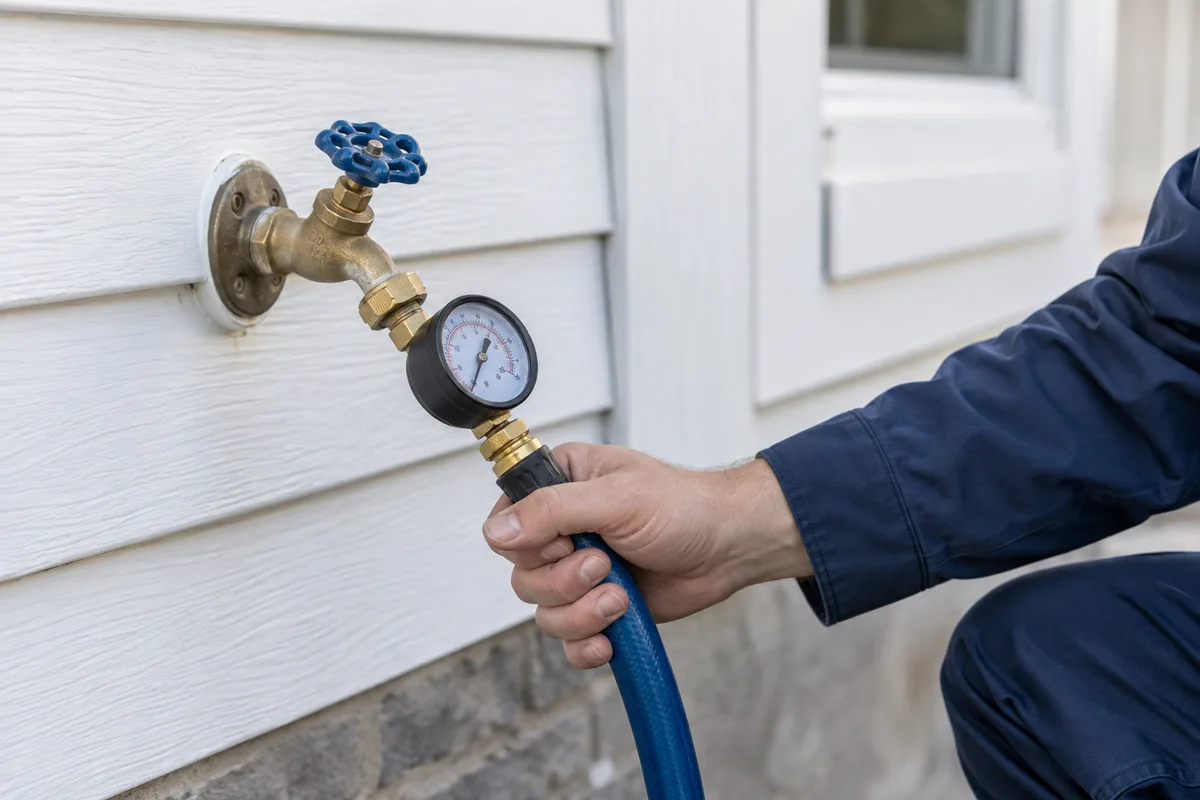
Appropriate measurements can help, but the circumstances in which they are taken should be understood. A reading without water use may not describe the behavior the household notices during simultaneous demand. Ask how the assessment accounts for the conditions that produce your complaint and what the findings support.
Explain what happens at busy times
If the shower changes when another fixture operates, describe that sequence. Household demand and restrictions can interact in ways that a single isolated observation does not capture. The person assessing should understand the real-use pattern before recommending a change.
Keep hot-water concerns distinct
If the issue mainly affects hot-water delivery, equipment and the hot-water route may need consideration. Our water heater repair guide helps organize symptoms associated with the heater. A problem at one mixing valve, however, may still be local to that fixture rather than evidence of a heater fault.
Review the surrounding plumbing
The assessment may consider accessible valves, treatment equipment, known supply routes, and the condition of relevant connections. The selection of next steps should follow the evidence. A partially restricted component and a wider supply-pipe concern can produce different repair recommendations, even when the homeowner initially describes both as low pressure.
Filters belong in the history
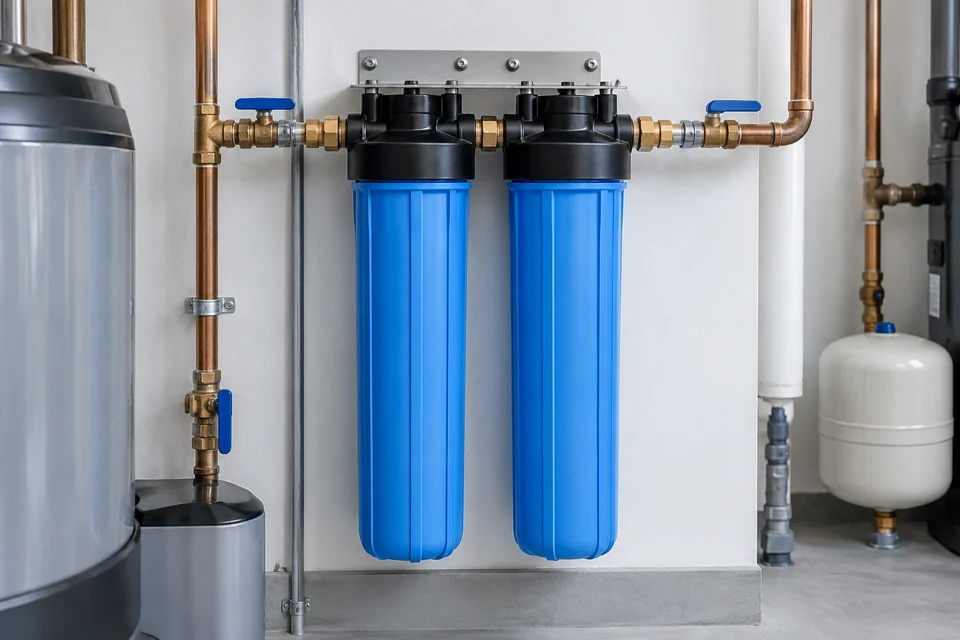
If whole-home filtration is installed, share the model and known service history. Treatment equipment has its own operating and maintenance requirements. Mention whether the delivery change followed an installation or service visit, without assuming the filter is automatically the cause.
Leaks may be relevant
Unexplained moisture, unusual water use, or an active leak should be included in the assessment. Water leak detection may be appropriate if the evidence points toward an unknown source. A delivery concern should not distract from a separate sign that water is escaping somewhere in the system.
Avoid choosing the repair before the diagnosis
A new faucet, a valve adjustment, and a broader pipe project are very different responses. Ask which finding supports the proposed action and what it is expected to improve. The explanation should make clear whether the issue is local, system-wide, or still under investigation.
Bigger projects need a clear reason
If deteriorating supply piping is identified as a broader concern, whole-house repiping may be discussed. That recommendation should include evidence and an explanation of why a limited repair would or would not be suitable. A disappointing shower alone is not a complete basis for a house-wide project.
What about pressure that seems too strong?
Unusually forceful delivery, changing behavior, or related concerns at connections should also be described rather than treated as an advantage. Ask for an assessment of the actual conditions and any relevant regulating components. Do not alter a regulator or other control without appropriate evaluation of the system and the intended settings.
If the change appears to originate outside the property, the next step may involve the water supplier. The assessment should distinguish what can be addressed within the home's plumbing from a concern that needs another party. A useful result sometimes includes identifying the correct responsibility rather than immediately replacing a component.
Leave with an explanation you can use
Ask what was measured or observed, what the findings suggest, and how any proposed work will be evaluated afterward. If symptoms are intermittent, discuss what information to collect if they return. A short record of timing and affected fixtures can be valuable during follow-up.
For a Pinecrest pressure inquiry, start with the symptom map and any recent changes. The goal is a clear account of why delivery feels different and what action fits the evidence. That gives the household a better path forward than trying one new fixture after another and hoping the whole system becomes more cooperative.
Find out what's behind the change in flow
Tell Pinecrest FL Plumbing what is happening at your property. Share the details and ask about current service availability.
Request service information