
The wall has a mark that was not there yesterday. The cabinet smells damp again. The water bill has changed, and nobody recalls filling an imaginary swimming pool. Hidden leak concerns often arrive as a collection of clues rather than one obvious broken fitting. It is understandable to want a definite answer immediately, but the most useful answer comes from tracing the evidence.
Water leak detection in Pinecrest focuses on narrowing the source and location of a suspected plumbing leak. Detection and repair are connected services, but they are different steps. Finding where water is escaping helps define the work needed to reach and repair it, and can prevent unnecessary opening of finished areas.
Begin with what you can actually observe
Note where moisture appears, when you first noticed it, and whether it changes with fixture use. Photograph the area from a safe location and keep a simple timeline. A stain that grows after a shower presents a different clue from moisture appearing while the house is unoccupied. Neither observation proves the source, but both help guide the investigation.
Water use is a clue, not a verdict
A change in consumption may reflect a leak, a change in household use, or another water-consuming activity. The EPA's household leak guidance discusses checking for unexplained use and common fixture leaks. Bring the pattern to the assessment without assuming that a bill alone establishes a hidden pipe failure.
A visible drip may need a different starting point
If you can already see water escaping from a connection, describe that clearly. Our active water leaks page addresses visible ongoing leaks. Detection may still be needed if the source is uncertain, but the service conversation should begin with the strongest evidence available rather than the broadest possible label.
Consider the full route water can take
Water can travel along materials before it becomes visible. The wet area may sit below, beside, or some distance from the source. That is one reason a careful assessment should not simply open the wall at the center of the stain and assume the answer will be waiting there.
Plumbing is also not the only possible source of moisture. The assessment may need to distinguish supply or drainage leaks from other building conditions. Be open to a finding that points outside the plumbing scope. A useful investigation follows the evidence even when the result differs from the initial guess.

Tools support judgment; they do not replace it
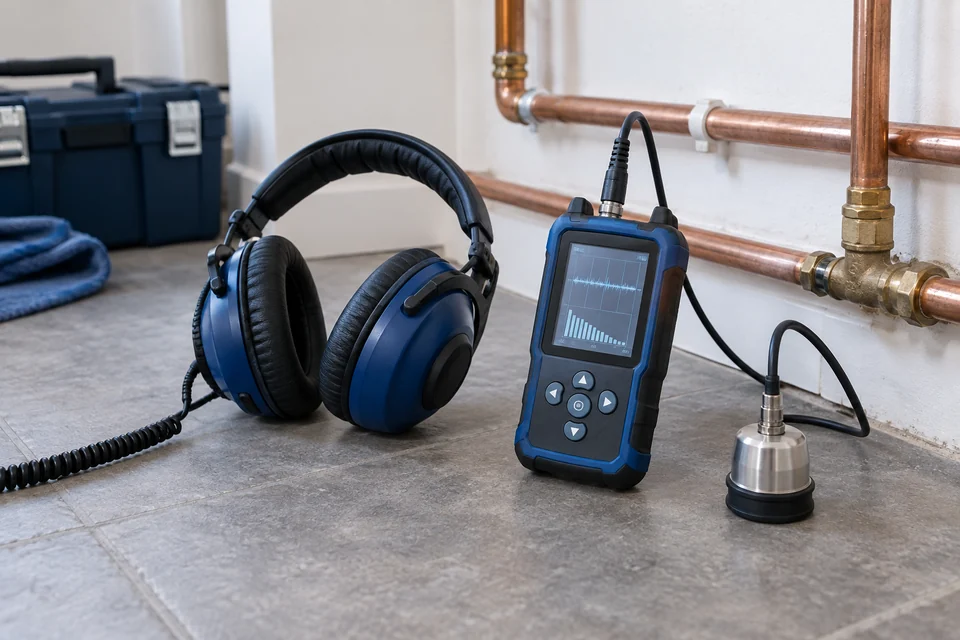
Depending on the property and suspected source, an investigation may use observations, isolation of parts of the system, or appropriate detection equipment. The choice should fit the question being answered. Ask what each proposed step can establish and what its limitations are. No single device should be presented as a magical view through every wall and floor.
Explain the uncertainty
Some investigations narrow the likely area before the exact defect can be confirmed through access. Ask how confidently the source has been located and what remains to be verified. That distinction helps you understand why a repair proposal may include a staged approach rather than one fixed assumption about concealed conditions.
Keep drainage and supply questions distinct
A camera used in a sewer line serves a different purpose from investigating a hidden pressurized water line. If your main symptom involves backups rather than unexplained moisture, sewer camera inspection may be the more relevant service. Choosing the investigation starts with identifying which part of the system is in question.
From a likely source to a repair plan
Once the evidence identifies an affected line or area, discuss the access needed and the repair options. A localized defect may lead to water pipe repair. Other findings may require a wider assessment. Detection should provide useful information for the next decision, including any limitations that affect the proposed scope.
If the concern involves a line near or beneath the foundation, our slab leak assessment page explains the additional questions around location, access, and possible routing changes. A suspected slab leak deserves confirmation rather than being declared from one warm patch or one unexplained damp spot.
Prepare the property and the history
Have prior repair details, renovation information, and available plumbing plans ready. Mention which parts of the house were added or remodeled, particularly if the symptoms began after work. Clear safe access to affected areas and known shutoffs without dismantling plumbing or opening concealed spaces. The useful contribution is information, not exploratory demolition.
- Note whether the moisture is constant, intermittent, or linked to particular water use.
- Share the location of previous leaks and how they were repaired.
- Identify any automatic water use, including appliances or outdoor systems.
- Explain areas that are inaccessible or need special arrangements before inspection.
These details can be especially helpful in an established Pinecrest home where visible finishes do not reveal the full renovation history. Two rooms that look equally new may connect to very different underlying plumbing. Knowing that history can save confusion during assessment.
Understand what the service delivers
Ask whether you will receive a description of findings, photographs where appropriate, and a recommended next step. Clarify whether the quoted service includes repair or only investigation. Also discuss who handles access restoration and any assessment of wet building materials. Those responsibilities should be clear before the project moves from finding the leak to recovering the room.
What if the leak is intermittent?
Timing becomes particularly valuable. Keep notes on when the symptom returns and which activities preceded it. Do not create unsafe conditions to reproduce the problem. An investigation may need to account for the fact that the source is not active continuously, and the limitations should be explained honestly.
The aim is not to make your home a mystery forever. It is to move from a worrying clue to a supported explanation, then to an appropriate repair. Start with the observations you have, and let those guide the next conversation.
Turn the clues into a clearer plan
Tell Pinecrest FL Plumbing what is happening at your property. Share the details and ask about current service availability.
Request service information