
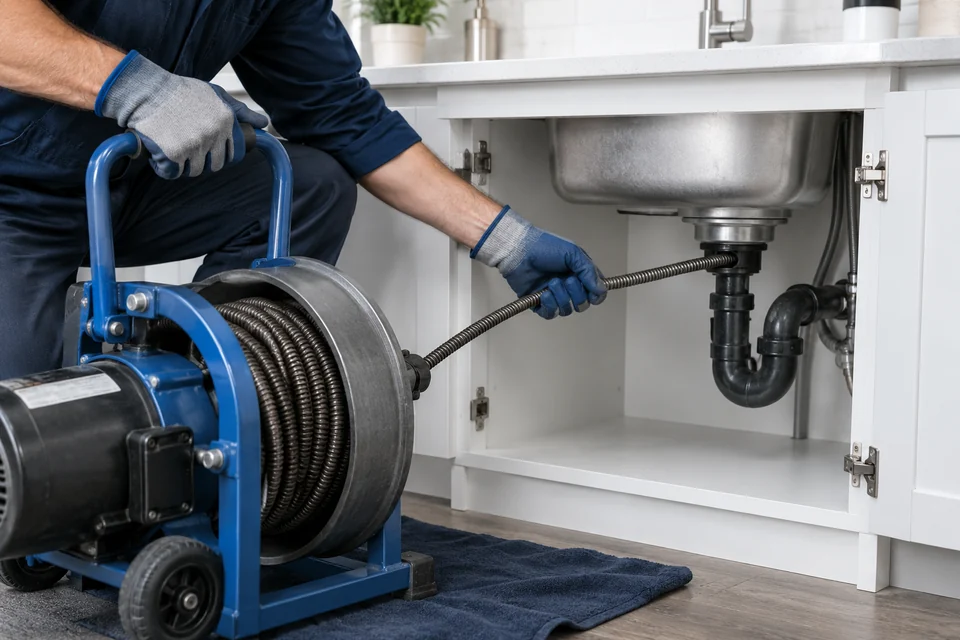
The kitchen sink gets involved in almost everything: breakfast, lunch boxes, coffee cups, dinner prep, and that ambitious weekend recipe with every pan you own. When it stops draining properly, the whole room feels less usable. A slow sink is easy to work around for a day. Then the workaround becomes part of the routine, and suddenly nobody wants to be the person who does the dishes.
Kitchen drain cleaning in Pinecrest focuses on the route carrying used water away from the sink. That route may also receive discharge from a dishwasher and connect to a disposal. Understanding the arrangement helps separate a drain restriction from a problem with the fixture or equipment attached to it.
Notice what makes the sink back up
Does water linger after a brief hand rinse, or only after a sinkful of dishes? Does one bowl fill when the other is used? Does the problem appear during a dishwasher cycle? Those details help explain how the restriction behaves. Share the pattern you have already observed rather than deliberately adding more water to a backed-up sink.
If the disposal itself hums, leaks, or does not operate normally, mention that separately. Our garbage disposal service page covers equipment problems that can accompany drain trouble. Replacing the disposal will not automatically clear a restriction beyond it, and clearing the drain will not repair a failed disposal component.
Why kitchen buildup needs a closer look
Kitchen drains deal with more than water. Food residue and grease can contribute to restrictions over time, and a drain that still accepts a trickle may struggle when more water arrives at once. The assessment should consider what is happening inside the line as well as the accessible connections beneath the sink.
The disposal is not a disappearing act
A disposal changes the size of some food waste; it does not remove that material from the plumbing system. Follow the equipment manufacturer's use instructions, and keep grease and unsuitable material out of the drain. The goal is to reduce unnecessary loading, not to find the perfect water temperature that makes everything acceptable to send down the pipe.
One kitchen, several connections
A double-bowl sink, dishwasher hose, and disposal create a more complicated picture than a single opening at the countertop. The location where water returns can offer useful clues about the shared path. Take a wider photo of the under-sink arrangement if it is safely accessible, especially when you are describing a recurring or recently changed problem.
Cleaning should fit the line
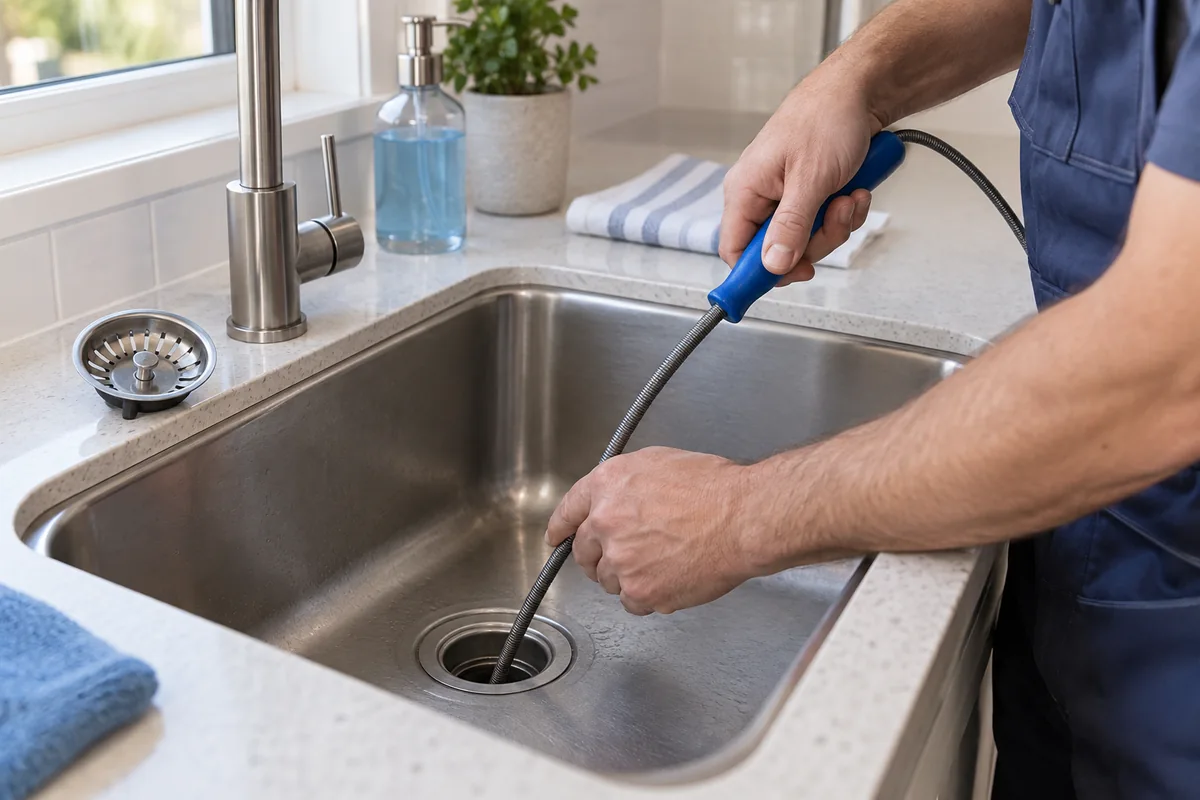
Before choosing a method, the person assessing the drain should consider access, the suspected restriction, and the pipe's condition. Ask whether the proposed work targets a local obstruction or a longer section of the branch line. Those are different objectives, and the distinction can explain why previous work gave only a short improvement.
In suitable circumstances, hydro-jetting may be discussed for more extensive cleaning. It is not a universal answer or an automatic upgrade. The condition of the pipe and the available access need to support the method. A sensible explanation should connect the equipment choice to the findings in your kitchen's actual drain route.
A leak underneath changes the conversation
If the cabinet is wet as well as the sink being slow, say so. A loose connection, damaged component, or problem at the sink assembly may need attention alongside the restriction. Water under the cabinet should not be dismissed as an unavoidable side effect of a clog. It deserves its own source assessment.
Keep track of when the moisture appears and avoid using the sink if discharge is escaping into the cabinet. If the source is uncertain, active water leak assessment offers a useful explanation of supply-versus-drain clues. Solving both issues requires distinguishing them, even when they happen in the same cramped space.
Make the work area easier to reach
Remove stored items from the cabinet when it is safe, and provide a clear route through the kitchen. Set aside product information for the disposal or dishwasher if those connections are involved. Tell the person completing the work about previous drain products and earlier clearing attempts. The cabinet should become an accessible work area, not a surprise collection of bottles and mystery puddles.
Ask whether the scope includes checking connected drainage after cleaning. If the sink only backed up during a dishwasher cycle, that original condition should be part of the discussion. You should understand what was checked, what improved, and whether any limitation remains. A sink that drains once is a welcome sign, but the full pattern matters.
When the same backup keeps returning
Repeated trouble can mean the line needs further investigation rather than another identical clearing attempt. The cause might be persistent buildup, an obstruction, or an issue with the pipe itself. Do not assume that a recurring kitchen problem always belongs to the kitchen. Tell the assessor if bathrooms or other fixtures are also affected.
If multiple drains are involved, sewer line cleaning may be the more relevant conversation. Your kitchen can be the first place you notice a shared problem because it handles so much daily activity. A complete symptom picture helps prevent the work from stopping at the most obvious fixture.
A better kitchen routine afterward
Follow the recommendations tied to the actual findings and your equipment. Keep a simple record of the service and note whether drainage remains steady during normal use. If the same symptoms return, describe how long the improvement lasted. That makes the next conversation more useful than “the sink is doing the thing again,” even if everyone in the household knows exactly which thing you mean.
For a Pinecrest kitchen drain request, start with the sink arrangement, the timing of backups, and any related appliance or leak symptoms. Those details help turn a frustrating interruption into a defined problem with a sensible next step.
Make room for the next load of dishes
Tell Pinecrest FL Plumbing what is happening at your property. Share the details and ask about current service availability.
Request service information