
An under-sink filter has a straightforward appeal: keep the equipment out of sight and make treated water available where you fill a glass or prepare a meal. The idea is simple. Choosing the right system takes a little more thought, because different products are designed for different treatment goals and installation arrangements.
Under-sink filtration in Pinecrest is a point-of-use decision. It focuses on the water delivered through the intended connection or faucet rather than assuming the entire home needs the same treatment. The useful questions are what concern you want addressed, whether the chosen system is suitable, and how it will fit and be maintained in your kitchen.
Define what belongs in the glass
Start with your actual concern: taste, odor, a specific water-test finding, or another stated goal. The system should be selected to address that concern within its documented capabilities. More cartridges or a larger package do not automatically mean a better match. The equipment should have a purpose you can explain without reading a list of marketing phrases aloud.
Check the claim for the actual model
NSF's water-treatment standards guide explains that standards cover different functions and do not mean every contaminant is reduced. Review the selected model's certified reduction claims for the concern you have. A certification reference should be specific enough to support the intended use, not treated as a blanket promise.
If the concern involves water safety or an active supply advisory, follow the relevant authority's guidance. A household filter is not automatically a substitute for those instructions. Ask what information or testing is appropriate before assuming a product resolves a health-related concern.
Compare the treatment scope
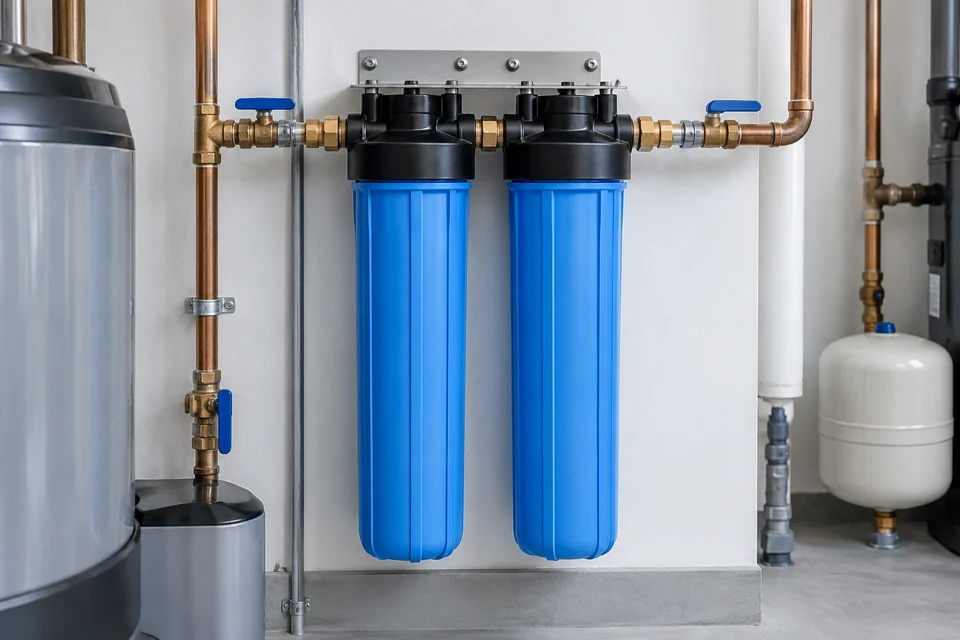
If your objective is focused on drinking and cooking water at one location, an under-sink arrangement may be worth considering. If the concern affects the intended supply throughout the property, whole-home filtration is a different option to discuss. Neither scope is automatically better; they answer different needs.
Decide how the treated water is delivered
Some systems use a dedicated faucet, while others have a different compatible arrangement. Confirm the actual product requirements before planning the sink deck. If the kitchen is also receiving a new faucet, coordinate the choices so the mounting layout supports both fixtures without surprise countertop work.
The cabinet is part of the design
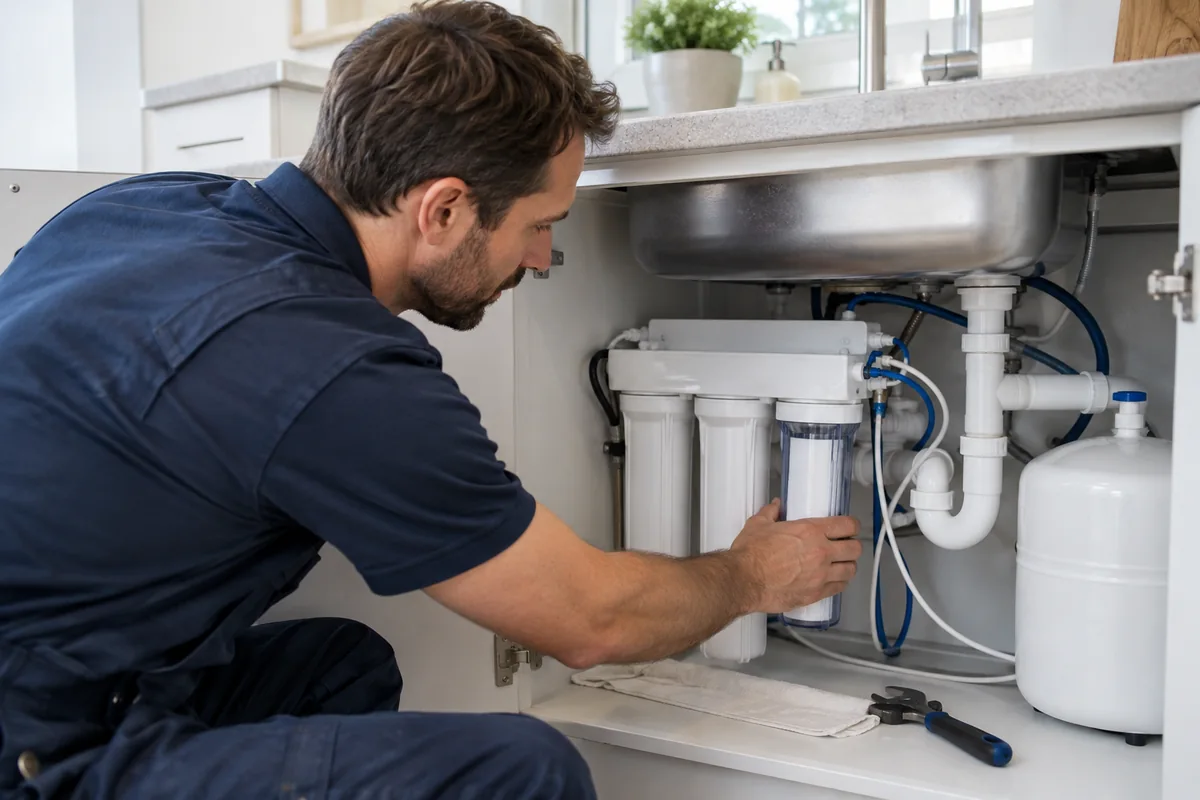
Measure the available space and consider the existing drain, disposal, hoses, and shutoffs. The system needs to fit while preserving access to the plumbing around it. Space for the equipment itself is only part of the requirement; cartridges and other service components may need room to be removed or handled during care.
Look beyond the product's outer dimensions
Ask how the installation will be serviced once the cabinet is back in normal use. A tightly fitted unit may become inconvenient if every filter change requires moving other equipment or emptying the entire cabinet. The goal is a setup that remains manageable after the excitement of installation day has passed.
Keep hose movement clear
A pull-down faucet hose or other moving component should not be obstructed by the new equipment. The complete under-sink arrangement matters. Our kitchen sink plumbing guide explains why supply, drainage, and attached equipment should be considered together rather than fitted into whatever gap remains last.
Understand the specific system requirements
Different treatment technologies have different installation and care needs. If a reverse-osmosis system is being considered, ask about that model's storage, drainage, and service requirements where applicable. Do not assume every under-sink product installs or operates in the same way simply because it is sold for the same room.
Match the system to your routine
Describe how treated water will be used: filling individual glasses, cooking, or other regular activities. Ask about the product's intended delivery performance and limitations. The system should fit your expectations as well as the cabinet. A kitchen routine becomes frustrating when the installation is selected without discussing how the household actually uses water.
Plan the maintenance before buying
Ask which components need replacement, how the interval is determined, and which supplies are compatible. Keep the manufacturer's instructions and model information accessible. Filter care is part of owning the system, not a detail to investigate only when the water changes or the next replacement becomes difficult to find.
Make the record easy to follow
Note installation and service dates and retain the component identification. If several people manage the property, keep the information in one place. A simple record prevents the familiar cabinet discovery of an unlabeled cartridge that might be new, might be old, and has somehow become everybody else's responsibility.
Coordinate appliance connections carefully
If you want the system to serve another connection, such as compatible water-using equipment, discuss that specifically. Appliance water line service involves its own installation requirements. Do not assume an additional branch can be attached without evaluating the treatment system, appliance instructions, and overall arrangement.
Similarly, a leak or weak supply that already exists should be assessed rather than hidden behind the new installation. Filtration addresses its defined treatment purpose. It is not an automatic repair for unrelated plumbing concerns in the same cabinet.
What the completed installation should include
Clarify the equipment and faucet arrangement, necessary connection work, checks after installation, and the instructions you will receive. Ask what is excluded, particularly countertop changes or separate trade work. Review access to the relevant shutoff and keep the product documents with the home's plumbing records.
For your Pinecrest under-sink filtration inquiry, share the water concern, available information about the supply, and the current cabinet layout. The aim is a practical drinking-water setup with a clear purpose and manageable care—one that quietly fits into your day instead of becoming another appliance you are still trying to understand.
Plan a drinking-water setup that fits
Tell Pinecrest FL Plumbing what is happening at your property. Share the details and ask about current service availability.
Request service information