
Water-treatment shopping can become confusing quickly. One product promises a better taste, another has more stages, and a third seems determined to solve problems you had not considered. For a Pinecrest homeowner, the sensible starting point is much simpler: what do you want to address, and what information supports that concern?
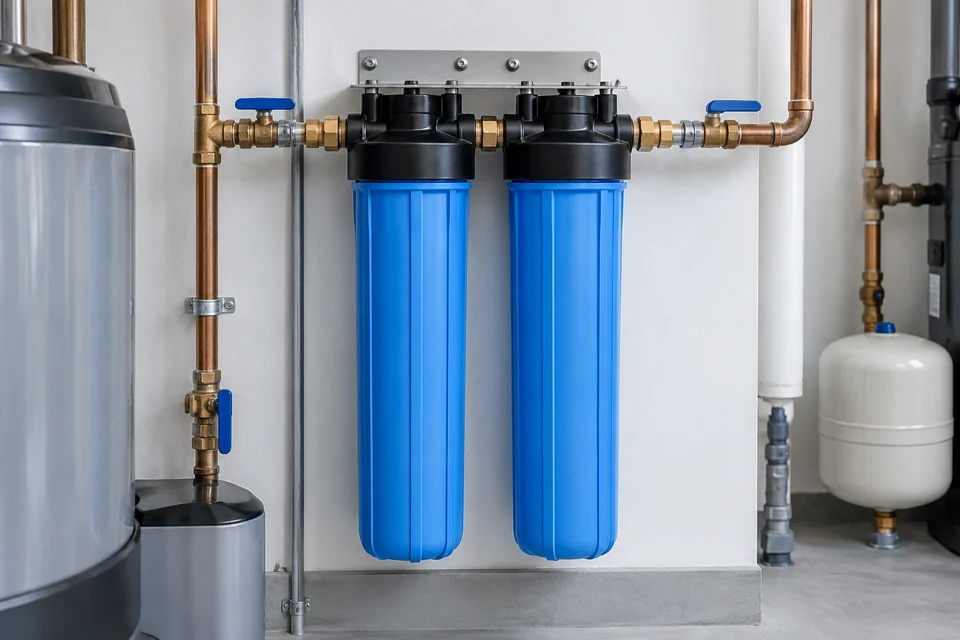
Whole-home filtration treats water along the supply route serving the intended parts of the property. The equipment should be selected for a defined purpose and sized for the installation. A large system is not automatically a more useful system, and a long list of marketing terms is not a substitute for suitable performance information.
Define the goal before choosing equipment
Describe the issue in ordinary language. Is the concern taste, visible sediment, odor, a particular test result, or something noticed at specific fixtures? These are not interchangeable goals. The next step should identify what information is needed to evaluate the concern rather than assume every complaint calls for the same type of filter.
Start with the water source
Know whether the property receives a public supply or another source, and gather relevant water information already available. Do not assume neighboring properties have identical arrangements. If testing is appropriate, ask which concern it will evaluate and how the result will guide the equipment choice. Testing should answer a question, not simply decorate a sales presentation.
Read treatment claims carefully
Certification needs to match the specific performance claim you care about. NSF explains that its water-treatment standards cover different purposes and that certification does not mean a system reduces every possible contaminant. Review the NSF guide to treatment standards alongside the actual model's listed claims.
Filtration and softening are different concepts
A product intended to reduce one type of material or improve an aesthetic characteristic should not be assumed to address water hardness as well. Ask exactly what each proposed component is designed to do. A treatment plan should distinguish its functions clearly enough that you know why every major component is included.
Avoid conclusions about water safety from appearance
Clear water does not establish every aspect of water quality, and an unpleasant taste alone does not identify a health-related contaminant. If a concern involves safety, use appropriate testing and guidance from the relevant water or public-health authority. Do not rely on a general-purpose filter as a substitute for instructions issued for your water supply.
Decide which water you want treated
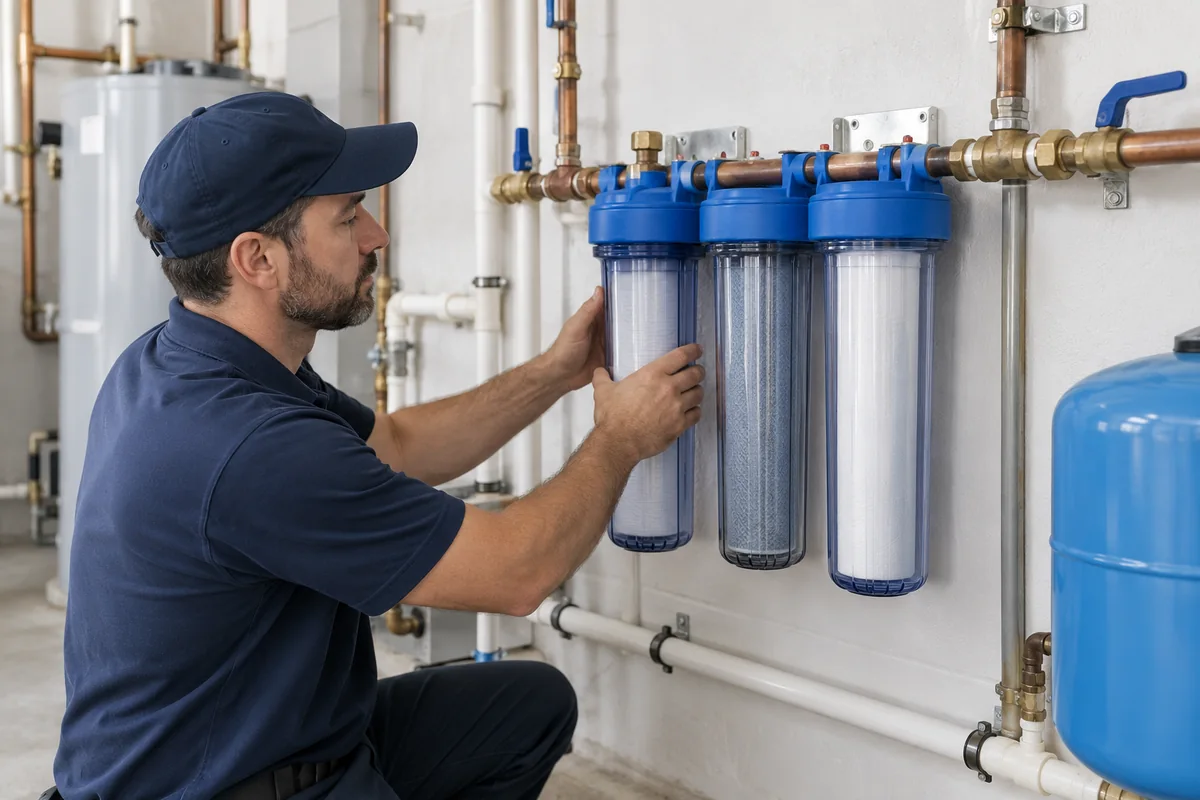
A whole-home approach and a dedicated drinking-water system serve different scopes. If the primary goal concerns water used at one kitchen tap, under-sink filtration may be worth comparing. Treating every intended fixture is a broader installation decision and should be justified by the purpose rather than assumed to be necessary.
Map the connections
Ask where the system would be installed and which branches would receive treated water. Outdoor use, separate equipment, and existing plumbing arrangements can influence the plan. The proposed boundary should be clear so you understand what the system serves and what remains outside it.
Match the equipment to household demand
The installation needs to support the property's intended water use within the equipment's specifications. Discuss simultaneous demand and any known delivery concerns before selecting a model. A system that suits the treatment goal still needs to function appropriately within the home's plumbing.
If the household already notices weak or variable flow, water pressure assessment can help separate that issue from the treatment decision. Adding equipment should not be promised to cure an unrelated supply concern. The assessment should explain how the proposed system interacts with the existing conditions.
Make maintenance practical from the beginning
Every proposed system should come with a clear explanation of its care requirements. Ask which components need replacement or servicing, how the appropriate interval is determined, and where suitable supplies are obtained. A system you can maintain correctly is more useful than one chosen solely for an impressive initial specification.
Access is not optional storage space
Leave room to reach housings, valves, and other service components according to the installation requirements. A location that technically fits the equipment may still be awkward for routine care. Think through the future appointment as well as the installation day. Filters should not require moving half the garage every time they need attention.
Keep records tied to the model
Save the product identification, installation information, and service history together. Avoid substituting generic cartridges or care advice without confirming suitability. Different systems can look similar while having different requirements. The record should make it easy to identify what is installed and how it is intended to be maintained.
Coordinate with other plumbing equipment
If treatment is being discussed because of a concern involving a water heater, explain that purpose explicitly. Our water heater maintenance guide emphasizes equipment-specific care. The proposed treatment should address a supported need rather than be presented as an automatic way to extend the life of every appliance.
Existing water pipe repairs or planned supply changes may also affect the installation location. Share those projects early so the connection plan can be evaluated as part of the actual system. Coordination is useful when it solves a practical issue, without expanding the project beyond the treatment goal.
Questions to settle before installation
Ask which concern the system addresses, what evidence supports the selection, which fixtures it serves, and what ongoing care requires. Clarify the installation scope, access, product coverage, and any separate work. If the proposal contains several components, request an explanation of each one's role.
For a Pinecrest filtration inquiry, bring the water source, observed concern, available reports, and household priorities. The goal is a clear match between the water issue and the equipment—not a cabinet or wall full of filters whose purpose becomes harder to explain with every added stage.
Choose treatment for the water concern you have
Tell Pinecrest FL Plumbing what is happening at your property. Share the details and ask about current service availability.
Request service information